
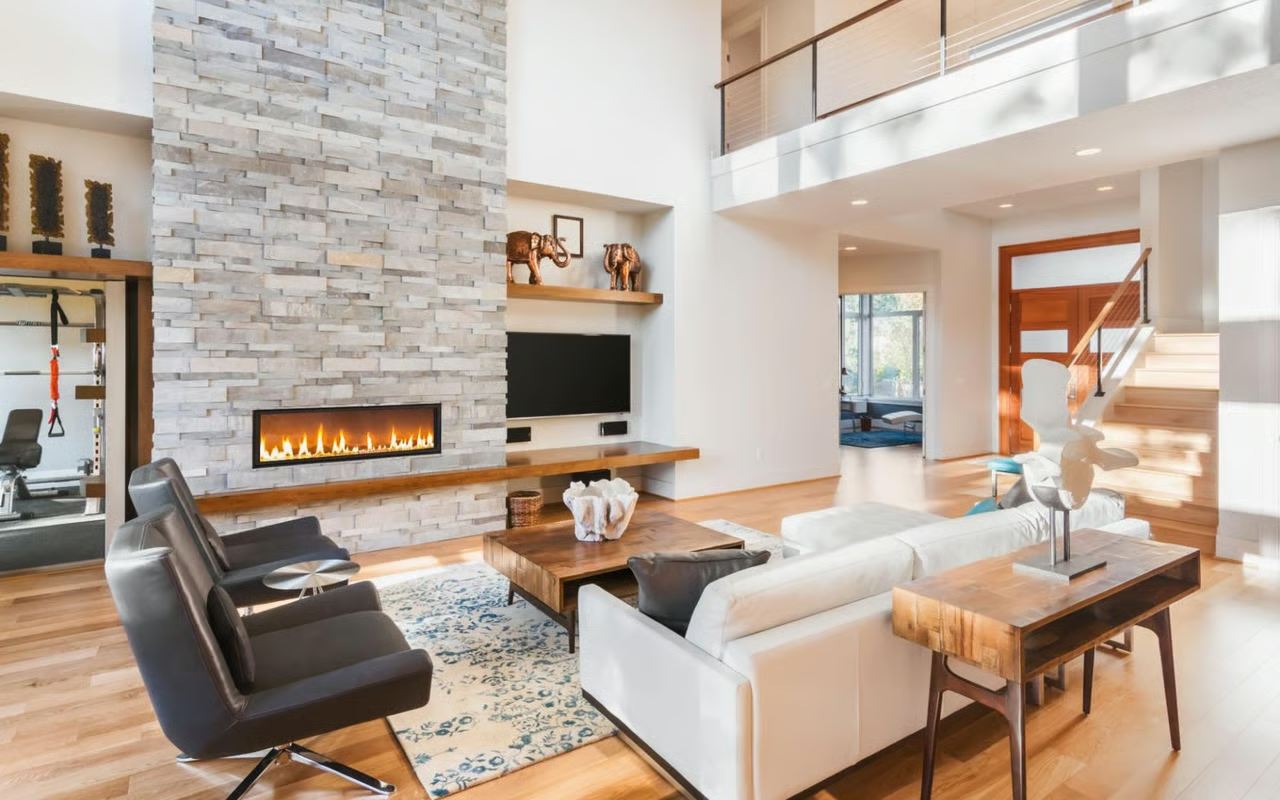
Choosing a property is one of the most important decisions a family can make. Whether the goal is to purchase a completed home, build from the ground up, or acquire a property for future development, the decision requires more than simply choosing a building that looks attractive.
A good family property should provide comfort, convenience, security, functionality, and room to adapt as life changes. It should also be located in an environment that supports the family’s current needs while offering potential long-term value.
Start With Your Family’s Needs
Before looking at properties, it is important to understand what the household actually requires.
Consider the number of people who will live in the property, the number of bedrooms needed, parking requirements, outdoor space, storage, entertainment areas, and whether a home office or other dedicated space will be necessary.
Families should also think about future needs. Children may grow, additional family members may move in, or work arrangements may change. A property that provides some flexibility can remain useful for much longer.
Location and Accessibility
Location should always be an important part of the decision.
A family home should ideally provide convenient access to roads, schools, healthcare facilities, shopping areas, workplaces, religious centers, recreational facilities, and other essential services.
Accessibility can make a significant difference to everyday life. A beautiful property that requires excessive travel for basic activities may eventually become less convenient than expected.
Consider the Neighborhood
The property itself is only one part of the living experience. The surrounding neighborhood matters as well.
Look at the quality of nearby roads, surrounding developments, drainage, security, utilities, and the general character of the area.
It is also useful to consider what is likely to happen in the neighborhood over the coming years. New infrastructure, commercial development, residential projects, and population growth can all influence the future attractiveness of an area.
Evaluate the Design
A good home should be practical as well as attractive.
Consider how rooms connect with one another, whether there is sufficient natural light and ventilation, how private the bedrooms are, whether the kitchen is functional, and whether there is adequate storage.
The best design is not necessarily the largest one. It is the design that makes effective use of available space.
Look Beyond the Finishing
Beautiful tiles, modern lighting, stylish kitchens, and attractive paintwork can make a property impressive during a viewing. However, prospective homeowners should also pay attention to the less visible aspects of the building.
The structural condition, roofing, plumbing, electrical systems, drainage, water supply, and quality of construction are equally important.
A professional inspection can help identify issues that may not be immediately obvious.
Think About Long-Term Value
A family property can also represent a significant long-term asset.
Properties in well-developed or strategically growing locations may benefit from improvements in infrastructure and increasing demand over time.
While future value can never be guaranteed, choosing a property with strong fundamentals can help support its long-term usefulness and desirability.
Buying or Building?
Some families prefer to purchase a completed property because it allows them to move in sooner and see exactly what they are buying.
Others prefer to build because it provides greater control over the design, layout, materials, and finishing.
Both approaches have advantages. The right option depends on budget, timeline, location, personal preferences, and the level of customization required.
Our Approach
At Sarles Investments Limited, we understand that a property is ultimately about the people who will use it.
Our approach to residential development focuses on creating homes that combine thoughtful design, quality construction, practical layouts, and desirable locations.
We aim to develop properties that provide more than an attractive appearance — they should offer comfort, functionality, security, and lasting value.
Conclusion
Choosing the right family property requires careful consideration of both immediate needs and long-term objectives.
By looking beyond appearance and evaluating location, design, construction quality, accessibility, neighborhood development, and future requirements, families can make more informed property decisions.
A well-chosen home should not simply meet today’s needs. It should provide a foundation for the life a family intends to build tomorrow.



Join The Discussion